As fundamental skepticism over whether massive investments in AI infrastructure can translate into actual profits grows once again, tech stocks in global markets, including South Korea, recorded their largest weekly drop since last June. While expectations for the continued expansion of the AI industry remain intact, the compounding negative factors at this juncture cast doubt on hopes for a year-end rally.
Anger Over 'High Inflation': French Protests Shake Europe
Is the unrest in France merely an unexpected event, or is it the eruption of a dormant crisis? Market participants watching the streets of Paris burn look on with heavy hearts. Although sparked by the fury of young people over cuts to the education budget—a crucial ladder for social mobility—the root cause lies in the chronic fiscal deterioration of European nations. In France, the price of one liter of diesel hovers in the 3,400-won range in Korean currency, more than 80% higher than in South Korea. Citizens' frustration has boiled over amid surges in rent, fuel costs, and food expenses driven by abnormal inflation. The fallout from the European Central Bank's prolonged low-interest rate policy, implemented to stave off the European debt crisis in the early 2010s, appears to be manifesting in earnest. Low interest rates led to an expansion of welfare spending for political purposes, pushing French public expenditure to over 57% of GDP, well above the eurozone average of 49%. The Russia-Ukraine war, now in its fourth year, and this year's U.S.-Iran war are driving up U.S. Treasury yields while applying further upward pressure on already high prices, plunging the European economy into crisis.
Amid stagnating growth, France's government bond yields have neared a record high of 5%, surpassing even those of Italy, once dubbed the "sick man of Europe." Given France's sheer economic size, its fiscal deterioration is highly likely to spill over into the broader European economy. Furthermore, if France is forced to sell off its U.S. Treasury holdings, it could further accelerate the global trend of rising interest rates. The ripple effects directly impacted the South Korean stock market today (October 20).
Trump Moves to Ease Russia Sanctions, Sparking Backlash: "Are You Out of Your Mind?"
The New York Times reported on October 17 (local time) that White House special envoy Steve Witkoff and President Trump's son-in-law Jared Kushner raised the possibility that "European purchases of Russian gas could be included in a peace agreement" during a meeting held earlier this month in Florida with officials from Ukraine and major European nations. European delegates were reportedly stunned by the idea, the newspaper noted. At the same time, the Trump administration announced a suspension of the implementation of the Graham Act, a key sanctions law targeting Russia. The rationale was that the legislation conflicts with measures to expand the global market supply of Russian diesel under the "energy truce" recently declared by President Trump.
The core punitive provision of the act imposes tariffs of up to 100% on all goods entering the United States from the top five importers of Russian crude oil and natural gas. The law was designed to strike at Russia's energy export revenues while penalizing purchasing nations in trade. The tariff targets were also set to include: ① countries that knowingly purchase crude oil or gas of Russian origin starting 30 days after the enactment of the law, and ② the top five nations assisting Russia in evading sanctions. Currently, the primary buyers of Russian crude oil include China, India, and Turkey.
Regarding this decision—which completely repudiates the steadfast policy of the European-led Western world to strongly sanction Russia and highlight the injustice of the war in Ukraine—President Trump told reporters, "It will be a good decision for the United States, and because we are truly on the world stage, I think it will be good for the world as well." He emphasized that it would alleviate energy supply constraints and inflationary pressures facing both the United States and other nations. This is, of course, driven by the upcoming midterm elections. Facing a stalemate in the war with Iran, the Trump administration appears to be going all out once again to mediate an end to the war between Ukraine and Russia. The administration aims to break the deadlock in peace talks by using the easing of anti-Russia sanctions, such as Europe's resumption of Russian natural gas imports, as a catalyst. Prior to this decision, Trump repeatedly asserted at campaign rallies that the surge in diesel prices—a critical component of everyday energy costs in the U.S.—was "due to Ukraine's strikes on Russian oil refineries," explicitly dismissing any connection to the war with Iran.
Should Europe, now potentially able to import Russian gas, welcome such a move? European nations largely share Ukrainian President Volodymyr Zelenskyy's view, which condemned it as a "misjudgment that only aids Putin." While energy costs remain an immediate headache, allowing Europe to resume importing Russian energy would grant Russia the financial resources needed to sustain its war against Ukraine. This would ultimately drag out the conflict and effectively abet hostile Russian aggression—the very outcome European society fears most.
Within the United States, criticism is mounting not only from Democrats but also from within parts of the Republican Party. House Speaker Mike Johnson, considered a Trump loyalist, remarked that "we must carefully examine the unintended consequences that may follow." Senator Darlene Graham, the sister of the former lawmaker who authored the bill and a Republican candidate running in the midterms to succeed his legacy, publicly voiced opposition, stating, "I will choose to keep the pressure on Russia to end the war and lower gasoline prices." Chris Wright, the Trump administration's Secretary of Energy, insisted that the waiver was not an "economic lifeline" for Russia but rather a "carrot offered to end the war," though critics viewed the rebuttal as feeble.
Midterm Scenarios: Key Market Variable Lies in 'AI Policy'
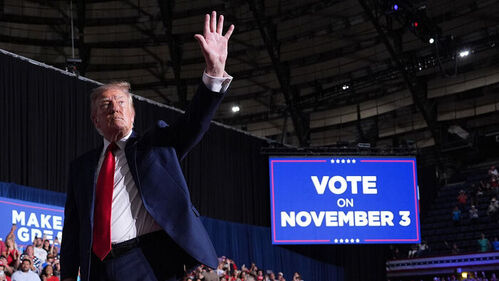
The biggest variable directly tied to Europe and the war in Ukraine is the U.S. midterm elections on November 3. With Trump's unpredictability clashing with Democratic policy stances, the election outcome is expected to generate significant reverberations. What draws particular attention is the Democratic Party's stance on the AI industry. Unlike Republicans, who prioritize corporate self-regulation and technological supremacy, Democrats are demanding strong government-led legal regulations and transparency to avert security threats, social inequality, and job displacement brought on by AI.
Democratic senators are pushing legislation to prevent the massive power infrastructure costs consumed by large-scale data centers from being passed on to ordinary citizens' electricity bills. Among them, more progressive politicians such as Sanders and Ocasio-Cortez are demanding stringent regulations, including a moratorium on data center construction, to protect workers and curb environmental degradation. To be sure, some lawmakers representing Silicon Valley districts in California and elsewhere emphasize balance, warning that excessive regulation could undermine American technological competitiveness and concede supremacy to China.
① If Democrats take control of the House while Republicans hold the Senate, the market is likely to interpret this as a resolution of uncertainty. With a gridlock forming between the executive and legislative branches, expectations are that policy volatility risks, such as abrupt legislative overhauls, would diminish. Furthermore, hopes exist that a Democratic majority in the House would rein in the Trump administration's fiscal stimulus policies, creating a favorable backdrop for stabilizing Treasury yields. ② If the ruling Republican Party scores victories in both the Senate and the House—a scenario deemed less probable—current policies would remain intact, potentially intensifying upward pressure on Treasury yields, while concerns could rise over Trump expanding the Middle East war unburdened by electoral concerns. Tax cuts and fiscal expansion pursued since taking office could also act as drivers for higher yields.
The scenario commanding keen market attention is ③ a clean Democratic sweep of both the Senate and the House. Despite anxieties surrounding President Trump's erratic moves and abrasive foreign policy, a Democratic sweep fuels forecasts of short-term market corrections and downside pressure. In particular, many analysts anticipate weakness in Big Tech shares due to Democratic initiatives to regulate and temper the pace of the AI industry. Policies governing data center construction, which directly affect AI firms' massive capital expenditures and revenues, are a critical variable. On the other hand, some optimists argue that while there could be short-term shocks, greater policy consistency and grounding in reality would enhance predictability, ultimately proving beneficial to the market in the long run.
Two Weeks of Inevitable Volatility: Will an Exit Emerge?
Nevertheless, prevailing expectations suggest that the framework of U.S. trade policy will not undergo a drastic shift regardless of the midterm results. This is due to the administration's independent authorities, such as executive orders, coupled with a bipartisan consensus across U.S. politics to counter China. With President Trump's approval ratings sinking to record lows, predictions on the prediction market platform Polymarket place the probability of Democrats taking the Senate at 64%, giving rise to the "Blue Sweep" scenario in which Democrats control both chambers. Typically, in midterm election years, stock markets experience downward pressure throughout September to October due to uncertainty, but the S&P 500 index has historically risen over the 12 months following the conclusion of the vote.
Amid this mutually reinforcing cycle of "War" -> "High Oil Prices" -> "High Interest Rates" -> "Rising Investment Costs" -> "Anxiety Over Massive Investments" showing little sign of cooling, the hurdles of geopolitical headwinds led by the Trump administration are exerting a profound influence. This is because they directly intersect with the question commanding the market's deepest scrutiny: the profitability of the AI industry. On top of this, one cannot shake the feeling that global hedge funds are exploiting interest rate and foreign exchange cycles, repeatedly engaging in derivatives-driven short-term trading and profit-taking sell-offs to disrupt the heavily semiconductor-weighted South Korean stock market. The U.S. midterms on November 3 represent a potential turning point where the tide could shift within this suffocating tunnel. It is a moment where expectations and anxieties intersect, with the potential for an entirely new direction to take shape.
※ Please note: This article was translated by AI and may contain errors.